
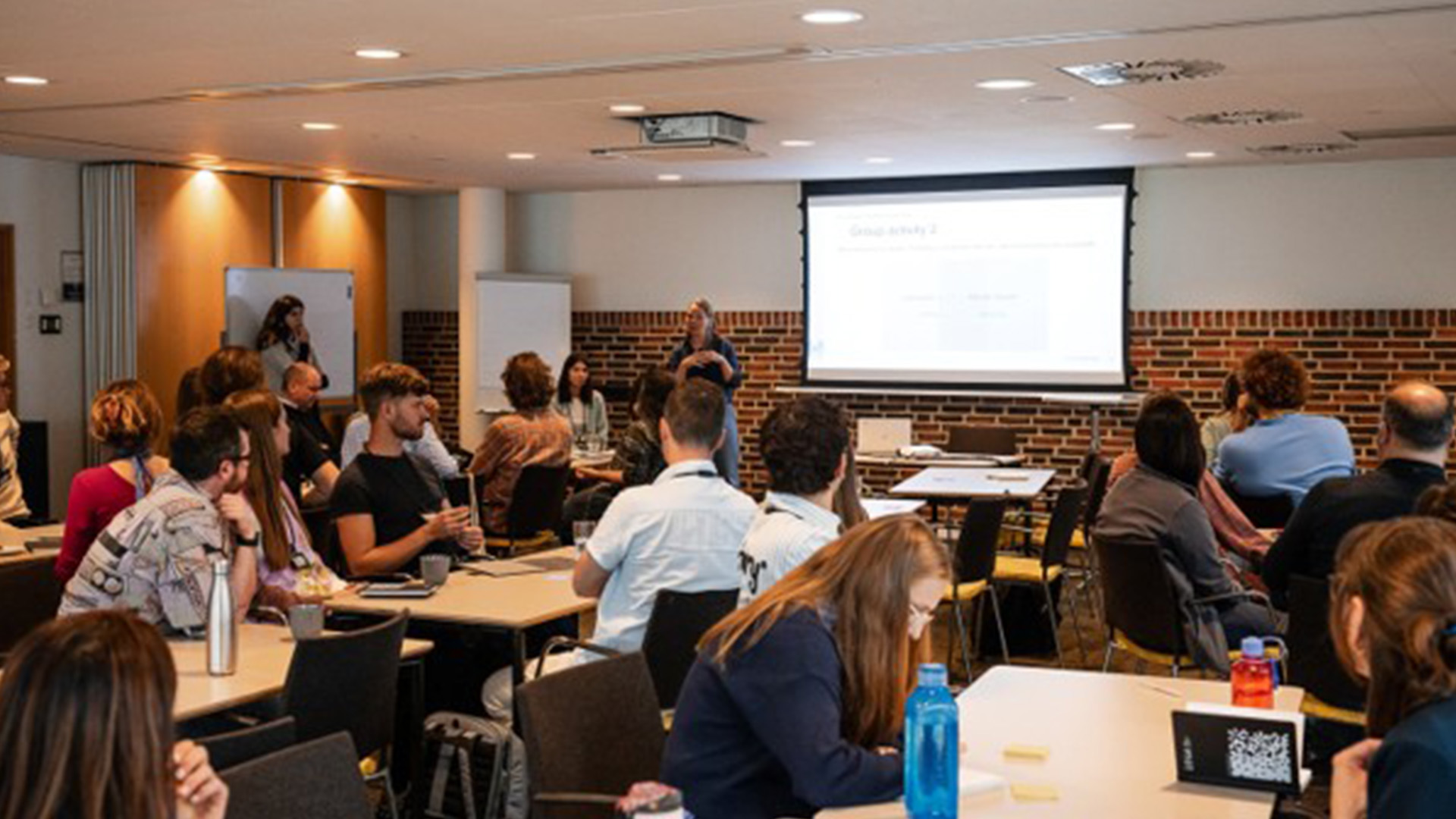
On 8 October 2026, RegionH DC Katerina Drakos along with DTU DC Eva Parashou organised a workshop entitled: “Conversational AI and Youth Mental Health: Mapping Risks, AI Literacy, and Safety” at the Danish Digitalization, Data Science and AI Conference in Nyborg, Denmark.
The D3A workshop discussed key principles for AI literacy and responsible AI design within mental health: “Youth mental health is a global crisis. Yet demand for support exceeds service capacity. Concurrently, young people are turning to general-purpose conversational AI for social and emotional support. These systems, however, have not been evaluated against real-world, representative benchmarks that include vulnerable youth, despite their potential detrimental psychological and social effects. Health agencies therefore call for responsible, child-centred design, human oversight and AI literacy.”
The interactive and interdisciplinary workshop addressed two questions:
What AI literacy promotes safe use of conversational AI in mental health contexts?
What technical risks should be identified, escalated and reviewed in practice?
Participants collaboratively identified practical principles for AI literacy, risk assessment and responsible AI design to guide developers, practitioners and policymakers. The workshop highlighted the need for a more in-depth, developmentally informed discussion of the implications of generative AI for child and adolescent mental health. Future guidelines on AI literacy could provide greater clarity on best practices for interacting with AI tools. While AI may offer benefits, including accessibility, timely support and opportunities for self-expression, participants raised concerns regarding overreliance, cognitive and social development, the reinforcement of maladaptive beliefs, and the potential exploitation of psychological vulnerabilities through engagement-driven design. A key takeaway was the need to move beyond AI literacy alone towards a more comprehensive approach that combines age-appropriate guidance, technical safeguards and risk assessment strategies. Achieving this will require transdisciplinary collaboration between mental health professionals, researchers, educators, policymakers and technology developers to establish recommendations, strengthen the evidence base and develop mechanisms for monitoring potential harms.