
AI-ready Newsrooms: Why the Online News Industry is at the Forefront of the LLMs Revolution

When thinking about generative AI and its disruptive impact, text generation often comes up as the most representative example of this new chapter in technological advancement. Large language models (LLMs) are rapidly transforming sectors that have at their core text generation tasks such as writing, drafting or summarisation, and the online news industry has been challenged in adapting to these new tools since GPT (generative pre-trained transformer) models became known to the mass public in late 2022.
Q&A with DC Matilde Barbini

What inspired you to join the alignAI project? As a research fellow in Italy and later as an NLP consultant, I observed how different organisations adopt AI technologies. In industry, there’s often a rush to integrate LLMs into products without fully considering the risks, like biased data or unclear decision-making processes. Companies frequently adopt AI […]
RAG: Teaching Large Language Models to Use a Library

Imagine you would like to write an essay about quantum computing, but your knowledge about quantum computing comes only from your high school textbooks. In this case, you know how to write good papers, but your knowledge is limited. Now imagine if you could access any library in the world while writing. That would make your work easier, and it’s essentially what retrieval-augmented generation (RAG) does for large language models (LLMs).
Education with AI, for AI or about AI? Positioning Large Language Models in Learning with Aligned Values

As the academic field increasingly implements technology to assist with output, LLMs have moved to centre stage, proving they can serve as powerful co-pilots, assisting with understanding abstract concepts, ideation, language-based prototyping, documentation and communication across disciplines. In educational settings, particularly with design students, LLMs have great potential as Creativity Support Tools (Frich Pedersen et al., 2018) and design material (Yu, 2025).
Q&A with DC Eva Paraschou

What inspired you to join the alignAI project? From my previous work on AI projects, I quickly realised that I’ve had two strong specific interests: AI applications for personal informatics (especially mental health and wellbeing) and the responsible and trustworthy aspects of these applications, particularly concerning fairness and explainability. Thus, with my computer science background, […]
Explore AI Ethics in Educational Context in ISLS 2025
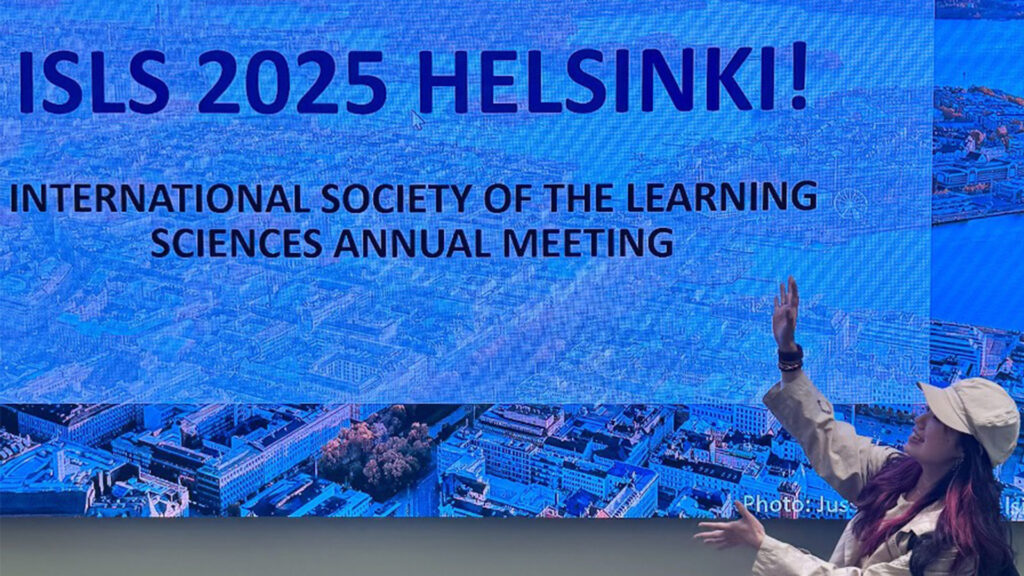
The International Society of the Learning Sciences (ISLS) conference, held in Helsinki, Finland, from 10-13 June 2025, gathered researchers and practitioners in the learning sciences.
Shaping Ethical AI for the Global South: Reflections from AIFOD 2025 at the UN Vienna
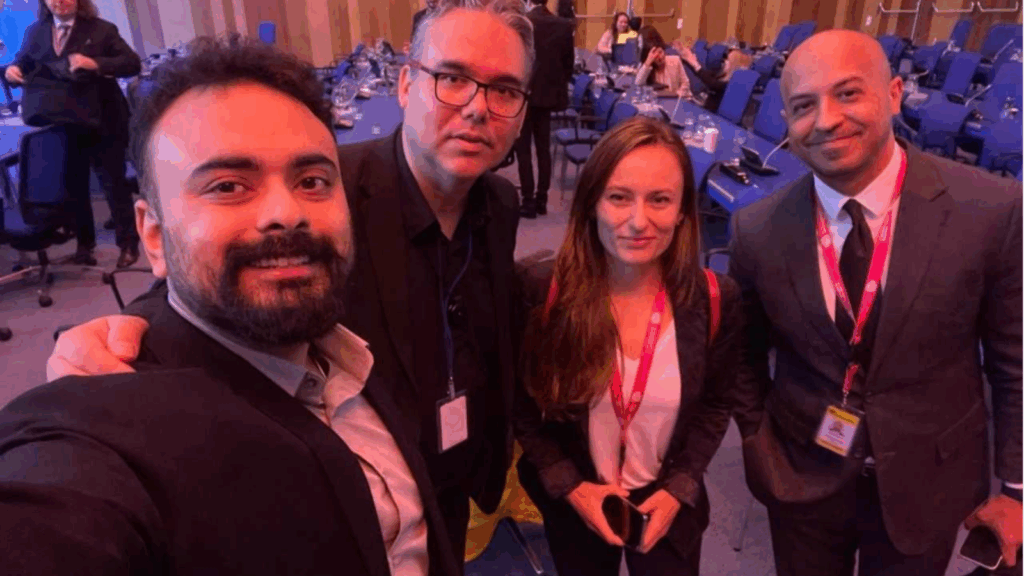
The current progress and ongoing evolution of the AI industry do not parallel the ongoing efforts of the world in general and developing countries in particular, to stand steadfast against the challenges that AI brings with its evolution. As a doctoral candidate in the AlignAI Doctoral Network (MSCA), Mohaned Bahr participated as a special delegate at the AIFOD Forum Summer Summit. In this blog he reflects on the outcomes and discussions from the plenary sessions, roundtables and parallel side events.
From Checklists to Care: Rethinking “Ethical AI” in Mental Health

“Is it fair?” “Is it explainable?” “Is it safe?” These are the questions commonly used to evaluate AI systems. In mental health, they seem especially relevant. Ethical guidelines, audit tools and compliance checklists promise trustworthy AI. But how helpful are these tools when emotional nuance and personal vulnerability come into play?
Designing the Divine and Meditating with Machines
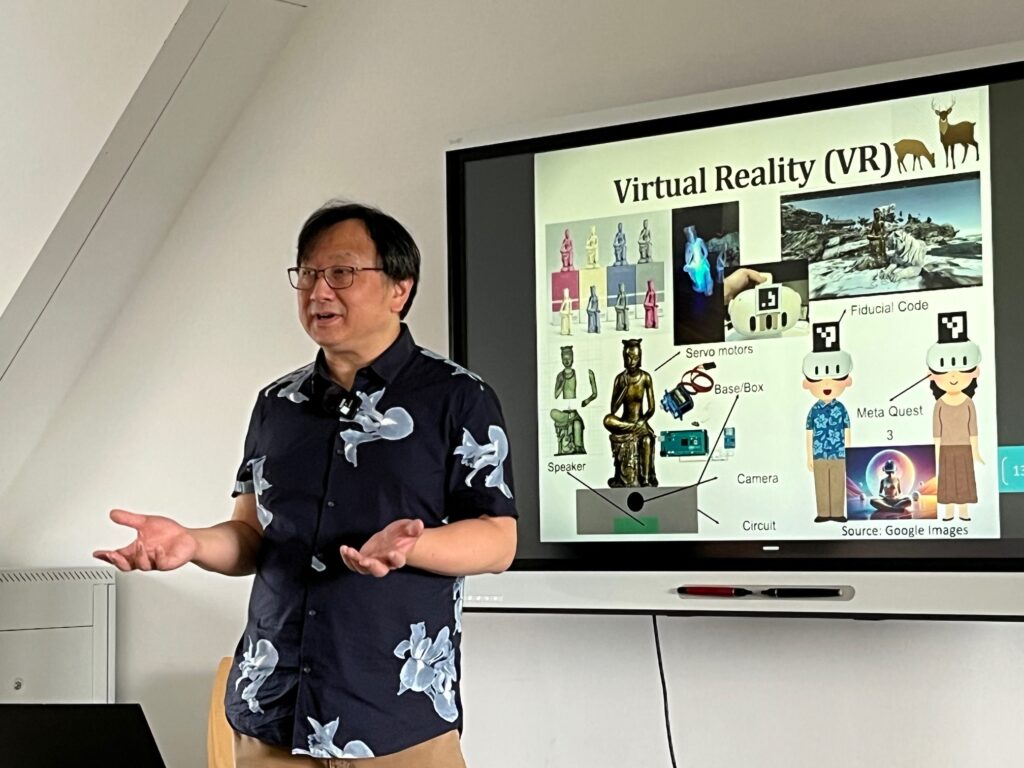
What does it look like when we try to design the divine? How do we meditate with machines? These questions were the focus of the TUM Institute for Ethics in Artificial Intelligence (IEAI) Speaker Series on July 16, 2025, titled “Meditating With Machines: When Spiritual Symbols Meet Augmented Reality”, hosted by Prof. Patrick Hung, Professor at Ontario Tech University. Dr. Auxane Boch, Research Associate at the TUM IEAI and coordinator of the alignAI project, moderated the session. alignAI Doctoral Candidate Julia Li attended the session and reflected on the intersection between spirituality, culture and technology.
Exploring AI, Moral Advice and Human Decision-Making
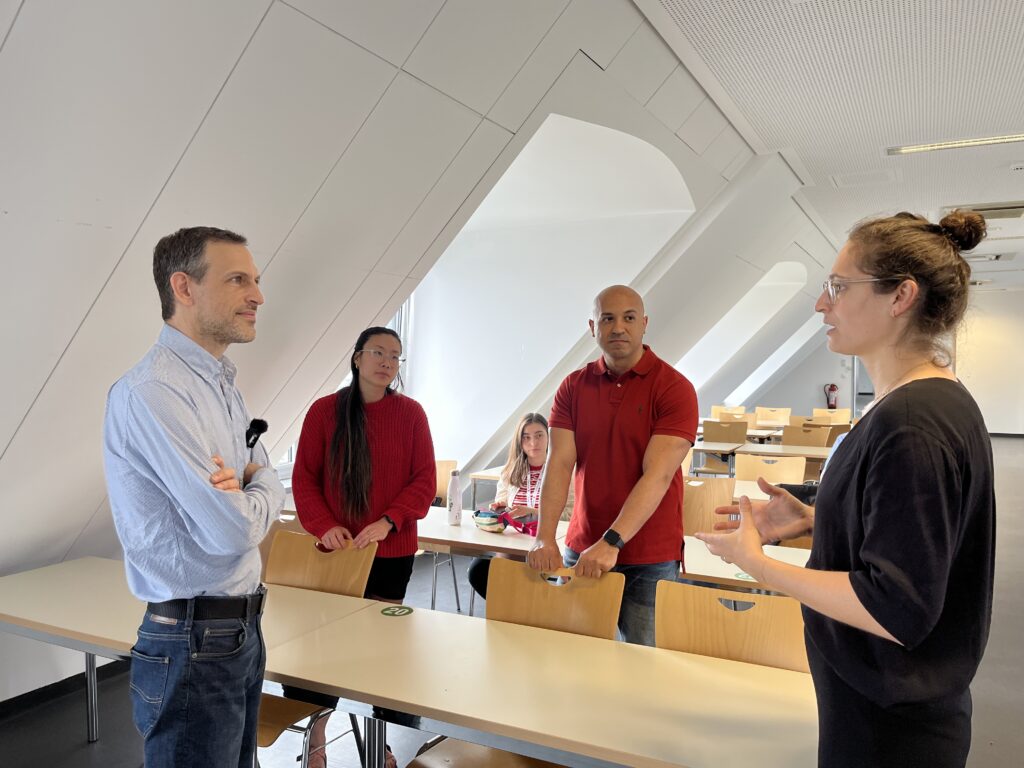
As part of the TUM Institute for Ethics in Artificial Intelligence (IEAI) Speaker Series, the alignAI Doctoral Network joined a timely session on June 16, 2025, featuring Prof. Eyal Aharoni, Associate Professor of Neuroscience, Philosophy and Psychology at Georgia State University. His talk, titled “Pandora’s Bots? Studies of AI Moral Advice and Their Implications for Human Decision-Making” was moderated by Dr. Franziska Poszler, Research Associate at the IEAI.