
The Myth of Neutral Participation: Why Good Intentions Aren’t Enough in AI Design

The field of AI is experiencing a participatory turn (Delgado et al., 2023). From tech companies to researchers, there is growing recognition that AI design and development should not happen in isolation from the people it affects. Regardless whether AI systems are designed for mental health, education or journalism, they need input from communities who deeply understand these domains. Interdisciplinary collaboration has been assuming a more pivotal role, bringing together computer scientists, researchers, ethicists and community members to create more aligned and responsible AI systems. This shift is certainly representative of progress.
AI-ready Newsrooms: Why the Online News Industry is at the Forefront of the LLMs Revolution

When thinking about generative AI and its disruptive impact, text generation often comes up as the most representative example of this new chapter in technological advancement. Large language models (LLMs) are rapidly transforming sectors that have at their core text generation tasks such as writing, drafting or summarisation, and the online news industry has been challenged in adapting to these new tools since GPT (generative pre-trained transformer) models became known to the mass public in late 2022.
RAG: Teaching Large Language Models to Use a Library

Imagine you would like to write an essay about quantum computing, but your knowledge about quantum computing comes only from your high school textbooks. In this case, you know how to write good papers, but your knowledge is limited. Now imagine if you could access any library in the world while writing. That would make your work easier, and it’s essentially what retrieval-augmented generation (RAG) does for large language models (LLMs).
Education with AI, for AI or about AI? Positioning Large Language Models in Learning with Aligned Values
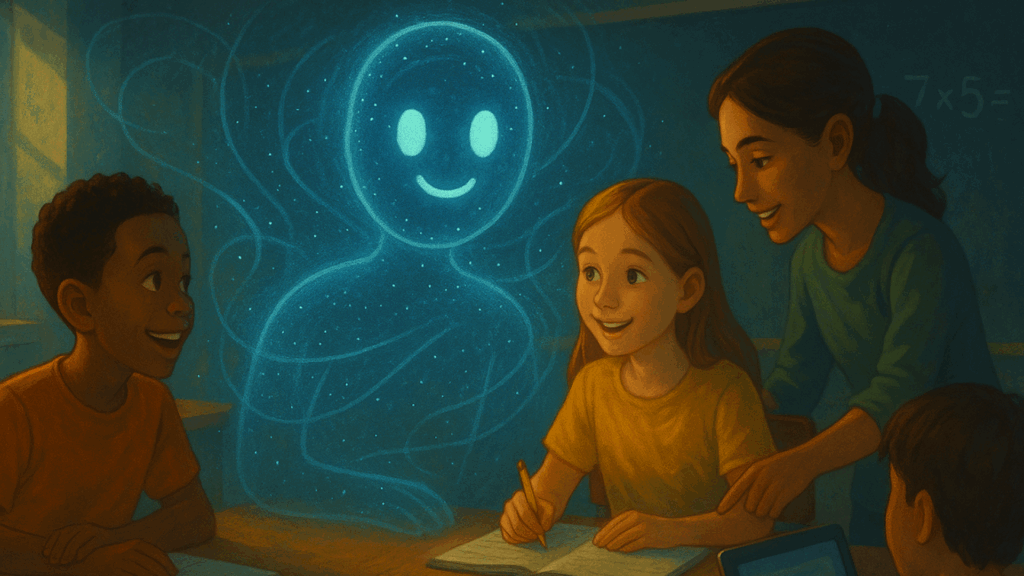
As the academic field increasingly implements technology to assist with output, LLMs have moved to centre stage, proving they can serve as powerful co-pilots, assisting with understanding abstract concepts, ideation, language-based prototyping, documentation and communication across disciplines. In educational settings, particularly with design students, LLMs have great potential as Creativity Support Tools (Frich Pedersen et al., 2018) and design material (Yu, 2025).
From Checklists to Care: Rethinking “Ethical AI” in Mental Health
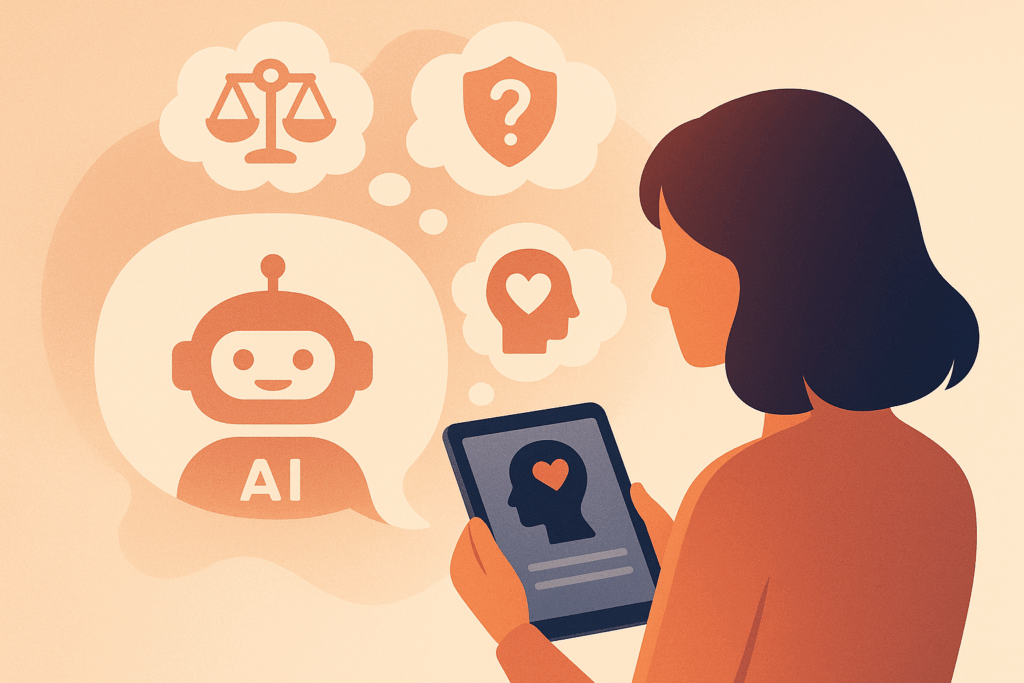
“Is it fair?” “Is it explainable?” “Is it safe?” These are the questions commonly used to evaluate AI systems. In mental health, they seem especially relevant. Ethical guidelines, audit tools and compliance checklists promise trustworthy AI. But how helpful are these tools when emotional nuance and personal vulnerability come into play?
AI For Everybody – Preferences, Equity, Fairness and Why They Matter
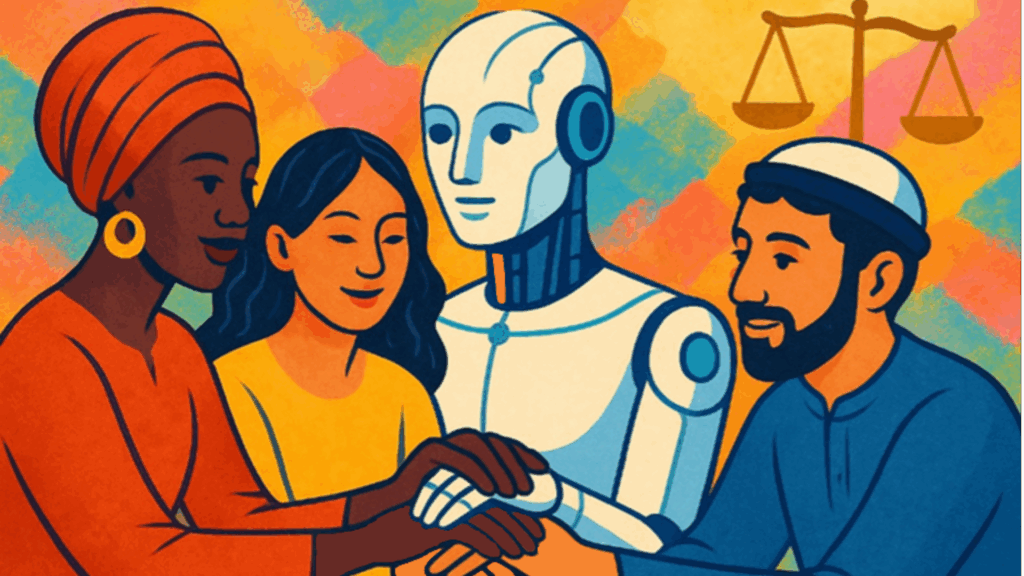
Imagine an LLM tailor-made for your cultural context such as where you live, the language you speak and the values most important to you. You can depend on it to proofread your emails for tone and social faux pas, respond in everyday, colloquial language and give you relevant recommendations on how to navigate your relationships. You can trust it not to give awkward responses that could put you in a compromised position and to understand the subtle nuances in human interaction vital to help you navigate everyday life.
How AI Learns to “Read” Like Humans (Using Maths)

Have you ever wondered how ChatGPT understands your sentences? The answer is hidden in two mathematical tricks that seem more complicated than they are.
Imagine this: You’re texting your friend about weekend plans. You type “Let’s meet at the park tomorrow” and send it. This is simple for you and your friend, right? But if AI were reading this message, it would be translated to something it can actually work with – numbers. Lots of these numbers format into what we call vectors.
Here we are in the world of embeddings and positional encoding, where words become vectors and positions, essential elements for AI to understand human languages.
AI, Alignment and the Mind – What’s at Stake in Mental Health?
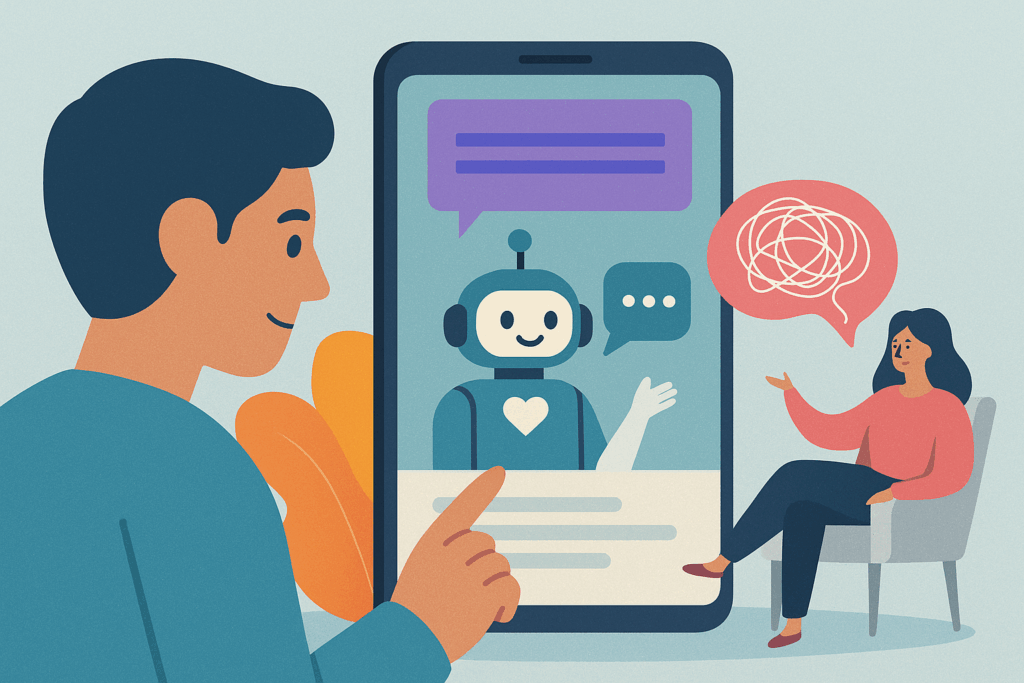
Imagine opening up about your anxiety to a chatbot at 2 AM, something you usually don’t do with a human. It “listens”, responds, maybe even offers advice. But how does it know what to say? Who trained it, and what values guide its response? Is it really helping or nudging you towards emotional dependence?
These questions are not theoretical. They are at the heart of alignAI’s Mental Health use case.
All Minds on Deck – Tackling Interdisciplinary Collaboration in AI

It’s not so long ago that we thought of AI as belonging solely to the realm of computer scientists, mathematicians and technical experts. But it’s time to move away from this idea.
Who might need to be involved to create an AI system that helps us detect wildfire threats in different forests? Or creating an LLM which aids in the detection of cancerous cells? Or an AI that facilitates smart energy use in a home?
More Than Just a Chatbot? – Why We Keep Treating AI Like a Person, and Why That Might be a Problem!

Have you ever wished ChatGPT a good morning? Asked it to “please” do something for you? Or thanked it when it did? Now ask yourself why. Maybe you wanted to be polite? Maybe it was a reflex? Or maybe you expected it to provide better results if you were friendly?
As AI systems (Large Language Models (LLMs) in particular) become more fluent, responsive, and seemingly empathetic, many users report a subtle shift in how they interact with them. ChatGPT remembers things from your past conversations, meets your energy if you are polite, and remembers your name. At times, it feels less like using a tool and more like speaking to a person.