
The Automation Divide: On AI, Inequality and the Future of Local News

There is both a perceived and material gap in AI adoption between large national news organisations and smaller local news providers (Rinehart & Kung, 2022). This gap has empirical indicators and has been examined in the scholarly literature, with some estimates suggesting that only 10% of AI systems deployed in journalism are used in local newsrooms (Aubin Le Quéré & Jakesch, 2022). Several factors help explain this imbalance: large national and international publishers typically have the financial capacity to develop in-house AI models, while smaller regional and local outlets are more likely to rely on off-the-shelf tools provided by platform companies (Simon, F. M. 2024b). Current debates about AI in journalism tend to centre on larger organisations, leaving local news organisations with less sustained attention despite their heightened exposure to these changes (Simon, F. M. 2024a).
Celebrating 30 years of the Marie Skłodowska-Curie Actions with alignAI
Since its inception in 1996, the MSCA has grown into the European Union’s flagship programme for researcher training, mobility and career development, supporting more than 150,000 researchers at all stages of their careers, fostering international mobility, cross-sector collaboration and excellence in research across Europe and beyond.
alignAI is proud to be a part of this remarkable legacy!
Where Do Humans Exist in This Digital Revolution?
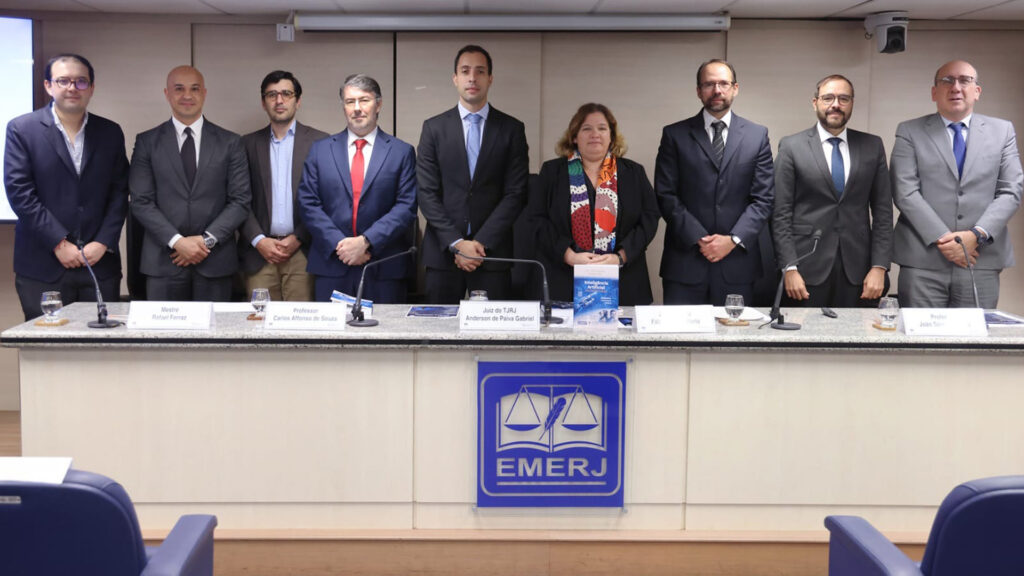
Egyptian judge on leave and alignAI doctoral candidate, Mohaned Bahr, was among the panelists at the EMERJ, at the Rio de Janeiro State Court School, upon an invitation from Instituto de Tecnologia e Sociedade do Rio de Janeiro (ITS Rio), and the EMERJ, on a panel titled “Direito e Tecnologia: A Justiça 4.0” (Law and Technology: Justice 4.0), where he presented his research on developing AI governance frameworks, inspired by the regulatory mechanisms devised in the EU AI Act.
Designing a Website for Tangible and Digital Activities for AI Ethics Literacy at TRAIF 2026
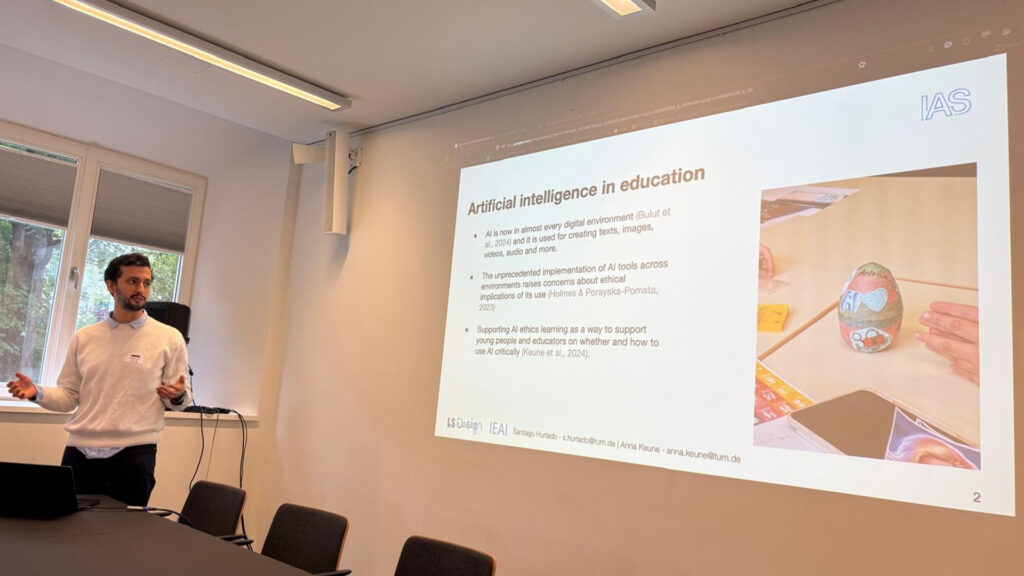
On 19–20 May 2026, Santiago Hurtado and Prof. Anna Keune from the Technical University Munich participated at The Responsible AI Forum (TRAIF) 2026 and presented their ongoing work in developing an online learning environment for AI ethics learning. The two shared their ongoing work on the design of an online environment for youth and educators to engage with AI ethics.
Exploring LLM Use in Non-Profits at TRAIF 2026
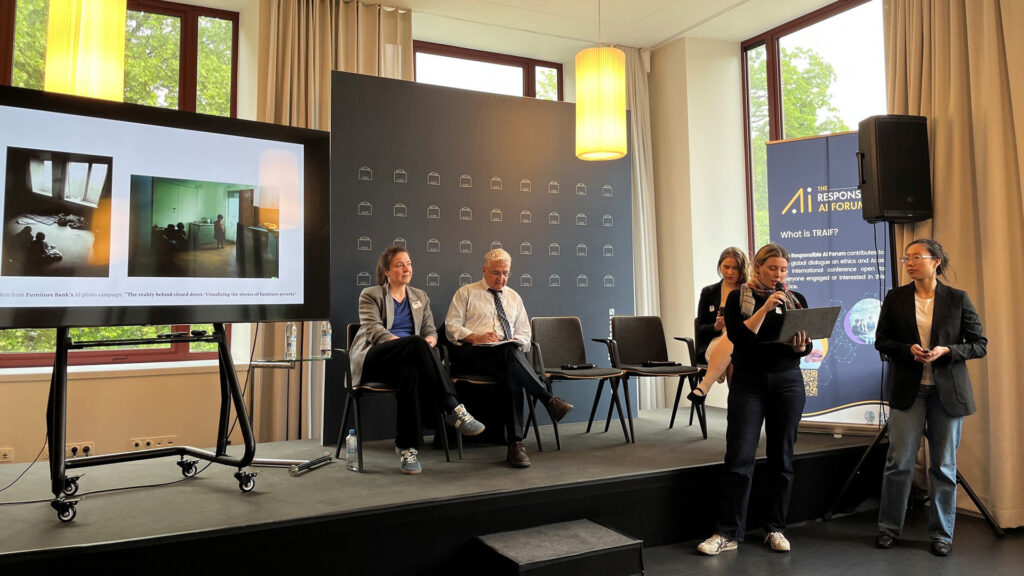
On 20 May 2026, alignAI doctoral candidate Julia Li from the IEAI at the Technical University of Munich, supervised by Prof. Christoph Lütge, and Annabelle Bernard from United Way Greater Toronto presented their work titled, “Core Value Conflicts of Early and
Prospective LLM and AI Adopters in the Non-profit Sector”.
Exploring AI Value Alignment and Critical AI Use in Educational Context at TRAIF 2026
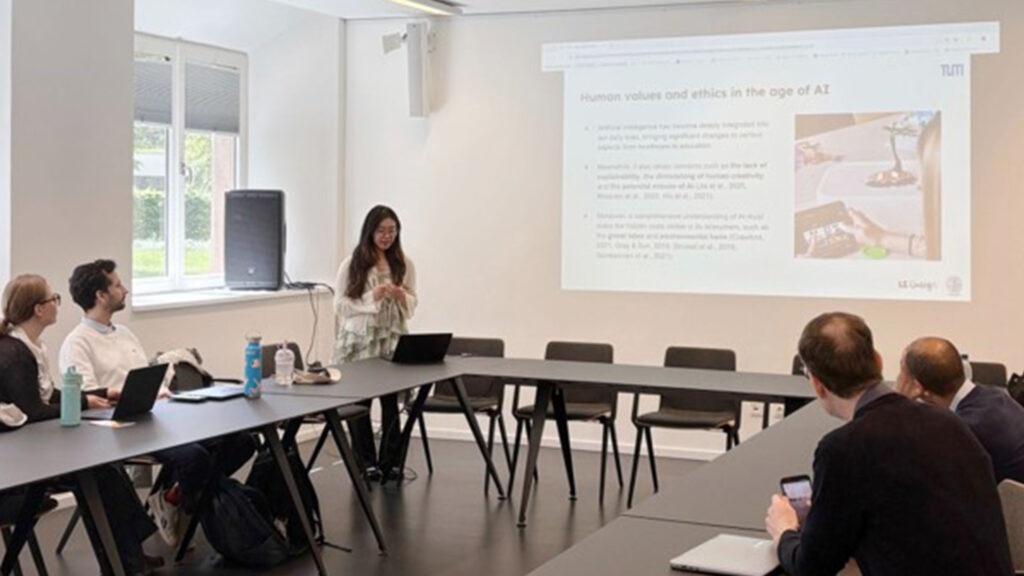
On 19 May 2026 at The Responsible AI Forum, alignAI doctoral candidate Xiaoyu Wang from the Technical University of Munich presented her work, supervised by Prof. Anna Keune, titled “Design for Critical AI Use and Creativity among Young People through Human-AI Co-Creative Making”.
Q&A with Former Project Coordinator Caitlin Corrigan
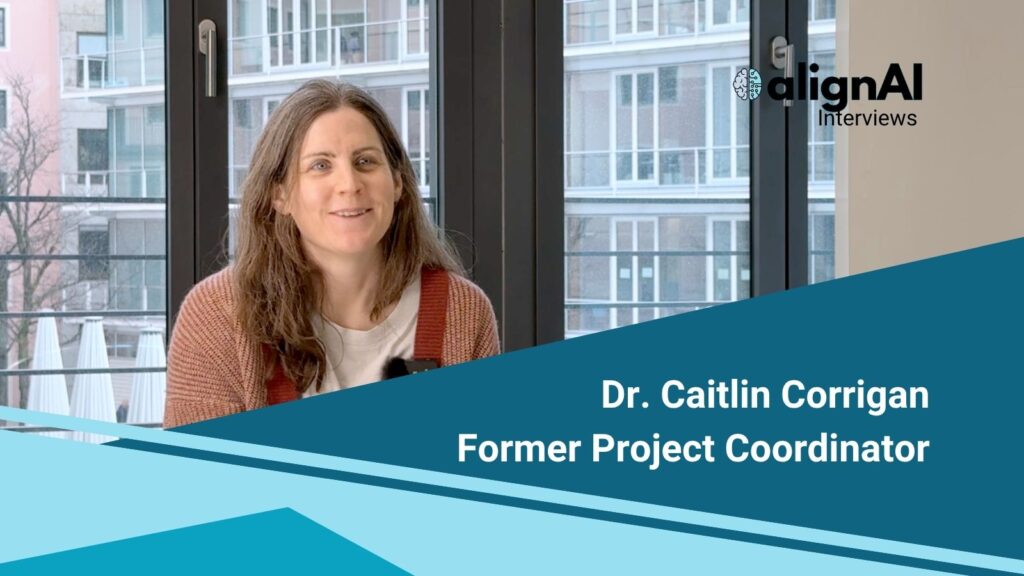
In this video interview, we speak with Dr. Caitlin Corrigan, former project coordinator of alignAI and former Executive Director at the Institute for Ethics in Artificial Intelligence. She introduces herself and her work at the intersection of academic research, policy and societal impact, and outlines the key goals currently guiding the alignAI project.
alignAI’s Winter Seasonal School in Copenhagen Brings AI Alignment to Mental Health
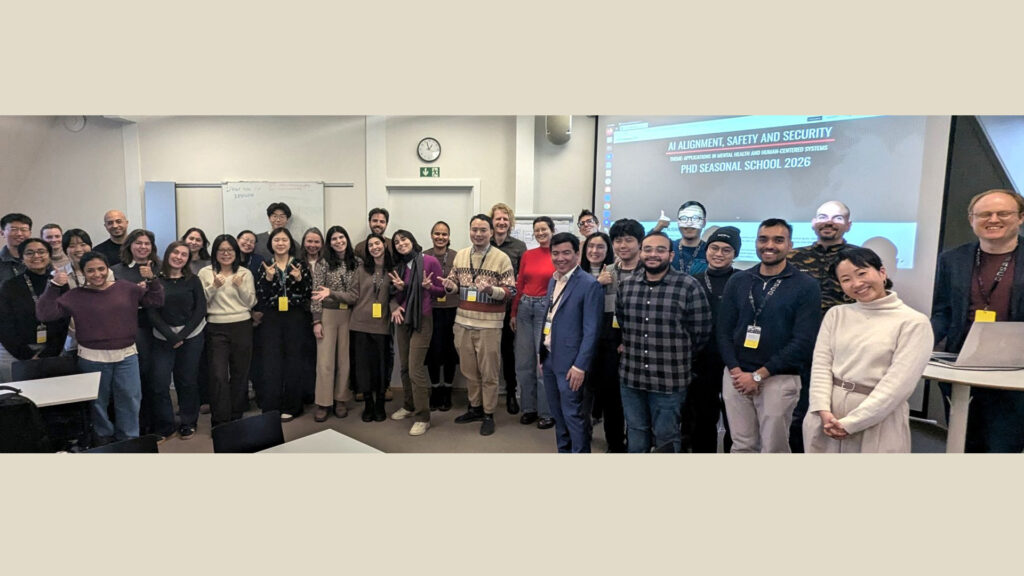
From 20 to 23 January 2026, the alignAI Doctoral Network held its second Seasonal School, “A2S2: AI Alignment, Safety, and Security: Applications in Mental Health and Human-Centered Systems”, in Frederiksberg/Copenhagen, Denmark.
Q&A with Project Leader Auxane Boch

In this video interview, we speak with Dr. Auxane Boch, project leader of alignAI and Associate Research Director of the Institute for Ethics in Artificial Intelligence. She introduces herself and outlines the project’s current priorities, highlighting the goals that matter most at this stage and how progress is being assessed.
Fingerprinting the Future: Did the EU AI Act Get It Right?

The Rojas case is invoked here not for its emotional weight but as a single, verifiable event that transformed a contested methodology into an authoritative institutional standard. On 29 June 1892, the people of Necochea, a small town in Buenos Aires, woke to horror. Two murdered children, but their mother, Francisca Rojas, was found injured and alive. Police rushed to the scene and arrested a neighbor based on Rojas’s accusations. At first, the case seemed straightforward, with a suspect and a witness.